RoamLine / Road trip planning app
One shared plan. Every mile together.
A road trip planning app that brings routes, stop discovery, shared itineraries, live vehicle tracking and split expenses into one place. Now in early access. Try RoamLine and start planning your next road trip.
The challenge and my contribution
Business context and objective
Group road trips spread routes, accommodation details and expenses across separate tools. RoamLine brings the shared trip into one product.
My contribution
I built the mobile product and its backend around trip membership, ordered stops, route discovery, opt-in vehicle tracking and expense settlement.
Technical approach
React Native, Expo, Node.js, Express, MongoDB and map services.
Documented outcome
RoamLine is now in early access. The case study documents implemented journeys and engineering decisions; it makes no adoption or revenue claims.
Explore React Native app development →RoamLine / The product
From the first pin
to the last mile.
A shared home for the decisions, discoveries and details that make a road trip happen.
iOS & Android
Early access · Try it now
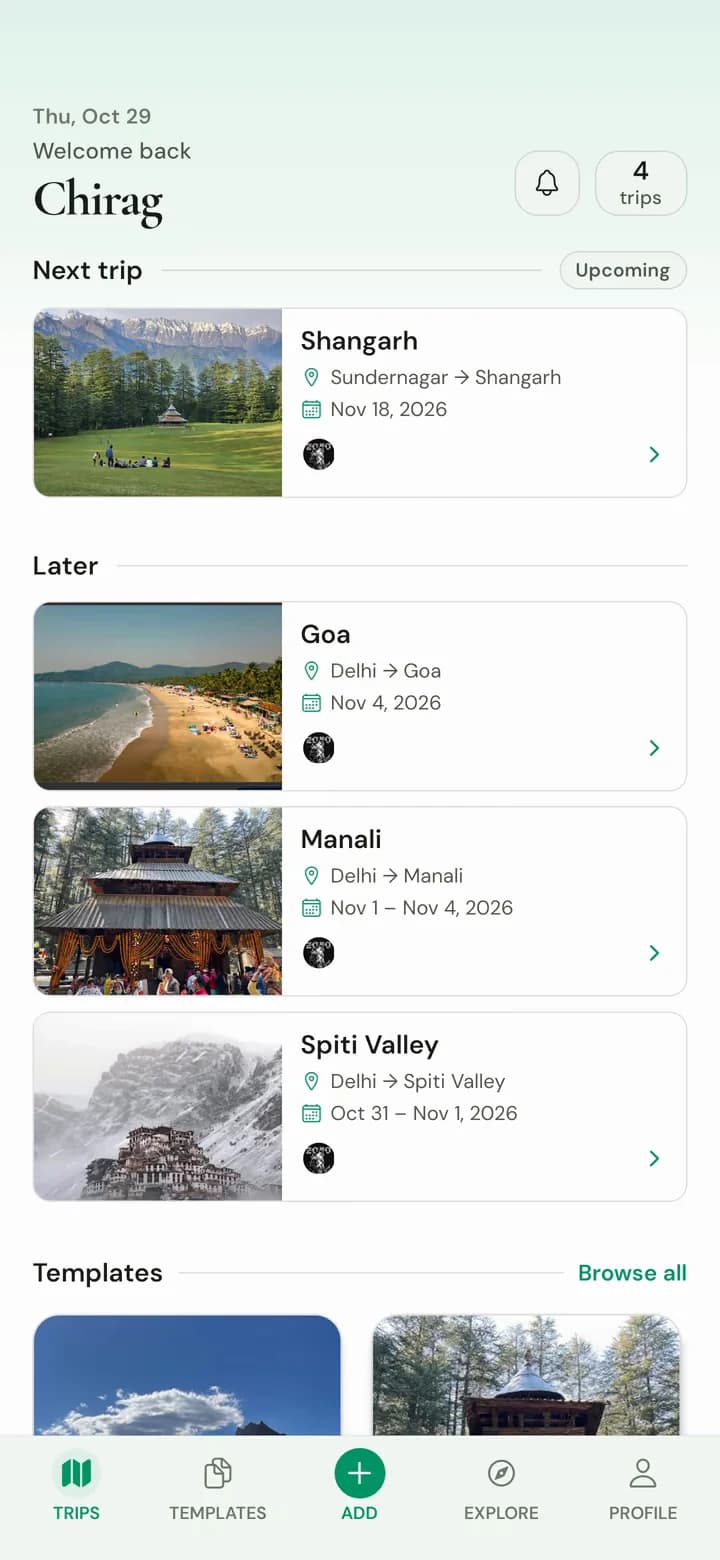
The challenge
One trip.
Too many loose ends.
The route sits in a maps app. Accommodation details are buried in messages. Someone is keeping a list of costs, while everyone else is trying to work out which version of the plan is current.
RoamLine is a road trip planning MVP built around that coordination problem. The goal is a continuous experience: the itinerary you prepare before departure should still be useful when the group is on the road.
Whether it’s a solo drive, a weekend with friends or a convoy covering a longer distance, the same question runs through the experience: what does everyone need to know before the next stop?
The product journey
A plan that travels with you.
Draft the trip
Start with a destination and invite the people coming along.
Shape the route
Arrange stops and weigh up discoveries against the drive.
Travel together
Carry the shared itinerary and vehicle view onto the road.
Settle up
Keep expenses organised through to the final split.
The experience
The details belong
with the destination.
Four connected parts of the product, each focused on a decision a traveller needs to make.
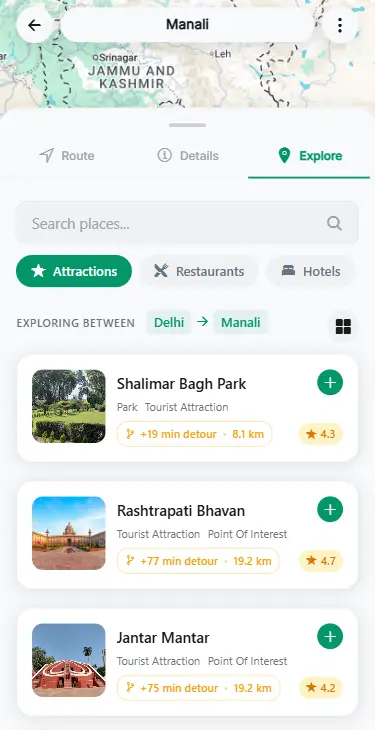
Explore along the way
Find places between two stops and preview the extra driving time and distance before adding a detour.
Make room for a viewpoint, a coffee stop or an unplanned discovery without losing sight of the whole route.
Give everyone the full picture
Bring the route, stays, check-in details, notes and packing lists together in a plan the whole group can see.
An invitation becomes the starting point for a shared trip, rather than another thread of screenshots.
Keep the convoy connected
See the group’s vehicles on one map, with location sharing that is opt-in for each trip and can be stopped at any time.
Coordination belongs alongside the route, with a clear choice about when to share a location.
Finish with the costs clear
Record fuel, tolls, food and stays as the trip unfolds, then see individual shares and a settlement breakdown.
Keep the financial side of the trip in the same context as the people and places it belongs to.
Behind the build
A connected experience.
Clear boundaries underneath.
The documented build combines a React Native / Expo mobile app with a Node.js API and MongoDB. The engineering work centres on keeping trip state, access and route calculations consistent.
- MobileReact Native + Expo
Trip screens & feature services
- APINode.js + Express
Access rules & product logic
- Data & mapsMongoDB + map services
Trip records, places & directions
A trip as the organising unit
The documented data model keeps ordered stops within a trip, while vehicles, expenses, settlements and tracking sessions have their own records. That gives each part of a journey a clear place in the system.
Access follows membership
Accepted trip membership and roles govern access. An invitation alone does not grant membership, so sharing a plan and authorising access remain distinct steps.
Maps behind a service boundary
Backend services mediate place discovery and directions. Route and suggestion caches are invalidated around edits, keeping route changes connected to the calculations they affect.
Current stage
Now in early access.
Ready for your next trip.
RoamLine is now in early access, bringing planning, coordination and costs into the same trip experience.
Try it on your next road trip and share your feedback to help shape what comes next.
Get early access (opens in a new tab)Product scope and previews: RoamLine website (opens in a new tab). Technical context: the project’s documented architecture. Early-access status updated 6 November 2026.